

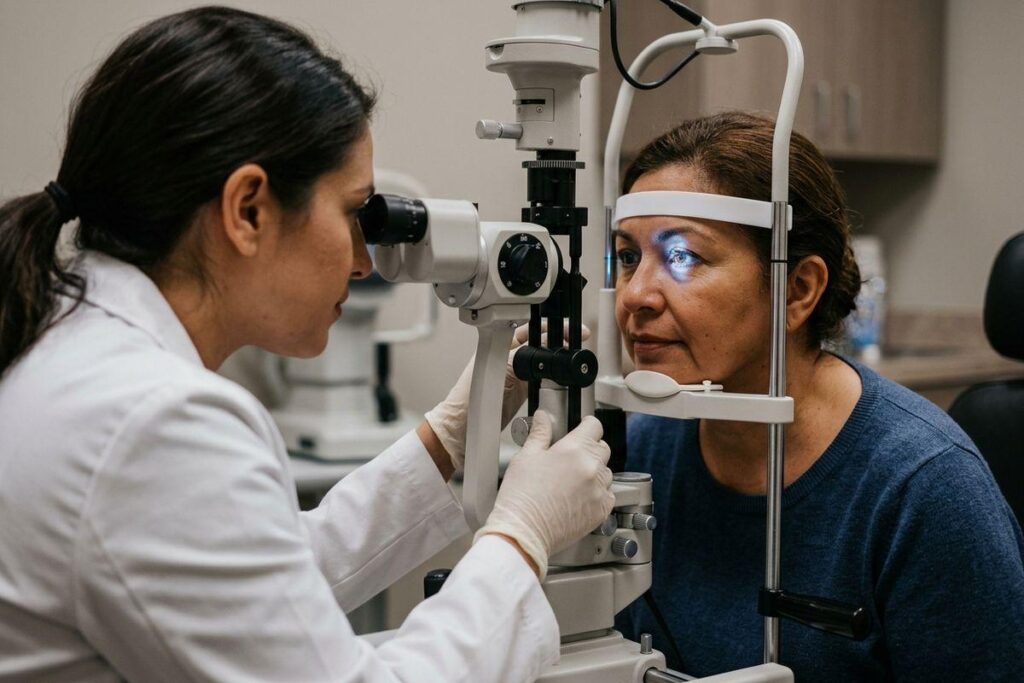
Most people book an eye exam to update a glasses or contact lens prescription. During that same visit, your optometrist gets a direct look at the blood vessels and nerves inside your eye, and those structures can show early signs of problems elsewhere in your body.
We look for these signs during our adult and senior eye exams, and if something needs a closer look, we can monitor it with you through our eye disease diagnosis and management services. An eye exam can detect signs of diabetes, high blood pressure, high cholesterol, heart disease, glaucoma, cataracts, macular degeneration, and some cancers, often before you notice any symptoms.
Your Eyes Reveal More Than Your Vision
When an optometrist examines your eyes, they’re looking at structures that reflect what’s happening throughout your body. Blood vessels run through the retina in ways that are visible under magnification, and changes to those vessels can signal problems far beyond your eyes. That’s something no other part of the body makes so easy to see without invasive testing.
Routine eye exams uncover conditions that haven’t caused pain, blurry vision, or any noticeable change yet. By the time symptoms appear, some conditions have already progressed. A thorough exam can give you a head start.
Health Conditions an Eye Exam Can Detect
Some findings during an eye exam point to health concerns that start outside your eyes.
Diabetes and High Blood Sugar
One of the more common findings during a dilated eye exam is damage to the tiny blood vessels in the retina. High blood sugar can damage the small blood vessels in your retina and cause them to leak blood and fluid. This complication is called diabetic retinopathy, and its early stages usually come with mild symptoms or none at all.
What makes this significant is that these signs can appear before a person even receives a diabetes diagnosis, meaning your eye exam may flag something your primary care doctor hasn’t found yet.
High Blood Pressure and High Cholesterol
Long-term high blood pressure can narrow or damage the vessels in your retina, a condition called hypertensive retinopathy. For some people, these changes are the first sign that their blood pressure needs attention.
High cholesterol has its own telltale sign: a yellowish or bluish ring around the cornea that an optometrist may notice during a routine exam. These findings don’t confirm a diagnosis on their own, but we’ll let you know if it’s worth bringing up with your primary care provider.
Heart Disease and Stroke Risk
Reduced blood flow in the retina can point to problems elsewhere in your circulatory system. A blockage in one of the retinal arteries, sometimes called an eye stroke, may mean you have a higher risk of a stroke in the brain.
Eye Diseases an Eye Exam Can Detect
Your optometrist also checks for conditions that affect the eye itself, and many of them develop slowly enough that you might not notice.
Glaucoma
Glaucoma damages the optic nerve, which carries signals from your eye to your brain. The most common type develops without pain and usually affects your side vision first.
During your exam, we measure the pressure inside your eye and check your optic nerve for changes. Vision lost to glaucoma can’t be restored, so early detection can help protect the sight you have.
Cataracts
A cataract is a cloudy area in the normally clear lens of your eye. Most cataracts develop after age 55, and they form so gradually that some people don’t notice them at first. Your optometrist can spot this cloudiness by examining the lens under high magnification.
Age-Related Macular Degeneration
Age-related macular degeneration, or AMD, affects the macula. That’s the part of your retina responsible for sharp central vision. Your optometrist looks for small yellow deposits called drusen, along with any retinal thinning. Your risk goes up after age 55 and with a family history of AMD, so tell us about any relatives who’ve had it.
Can an Eye Exam Detect Autoimmune Disease and Cancer?
Some autoimmune conditions and cancers leave signs in or around the eyes that your optometrist may notice during a thorough exam.
Inflammation of the optic nerve, called optic neuritis, is strongly linked to multiple sclerosis and other autoimmune conditions. Rheumatoid arthritis and lupus can also contribute to dry eye and inflammation on the eye’s surface.
Skin cancers can appear on the eyelids or on the surface of the eye, where an optometrist may notice them during a thorough exam. Inside the eye, conditions like leukemia, lymphoma, and breast cancer can produce changes that show up during a detailed retinal evaluation. These aren’t diagnoses, but they’re signs worth taking seriously.
How Often Should You Get an Eye Exam?
How frequently you need an eye exam depends on your age, health history, and risk factors. We recommend a comprehensive eye exam every year for adults, even when your vision seems clear. Your optometrist may suggest more frequent visits if any of these apply to you:
- You have diabetes
- You have high blood pressure
- You have a family history of eye disease
- You take steroid medications long term
- You’ve noticed vision changes, even ones that come and go
We’ll work with you to set a schedule that fits your health history.
Schedule Your Eye Exam at Stonebridge Eye Care
A few minutes with your optometrist can tell you about your vision and give you useful information about your overall health.
At Stonebridge Eye Care, we take time to review your health history and explain what we see at each step of your exam. If something needs follow-up, we’ll talk through your options and coordinate with your other care providers when needed. Book your next eye exam and let’s look after your eyes together.