

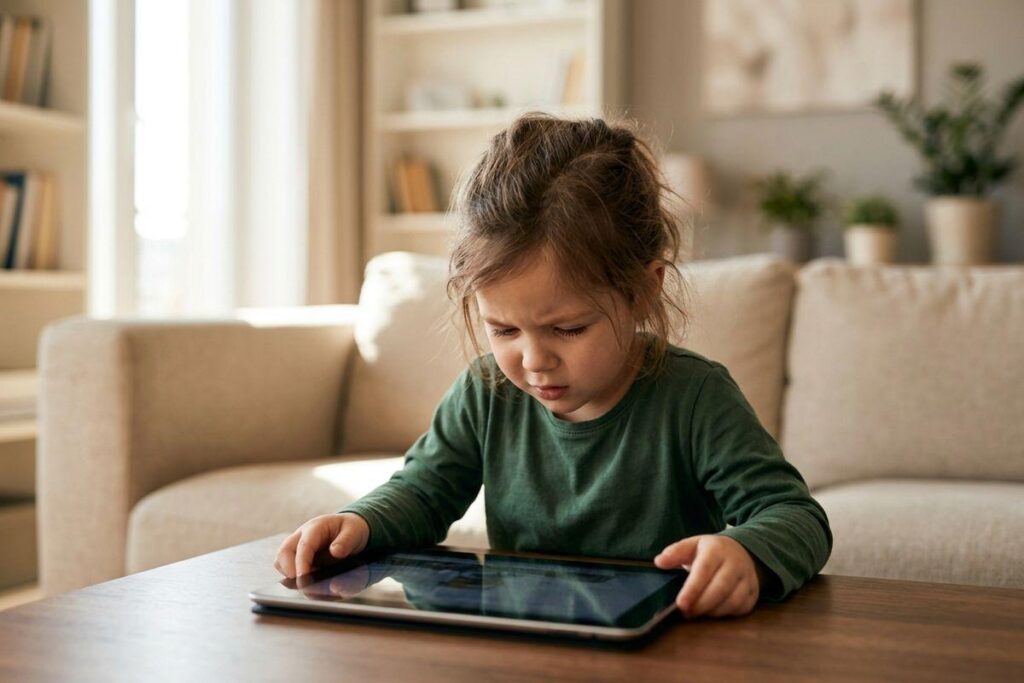
Plenty of parents assume blurry vision is a phase, something a kid grows past around middle school. It’s a comforting idea, and it comes up in exam rooms all the time. Most childhood vision problems don’t fade with age, and several get stronger over time.
That doesn’t mean you need to worry. A children’s eye exam gives you a clear picture of how your child’s eyes are working, and what happens at home, including how they handle screen time, can support the plan that comes out of it.
Common Vision Problems in Children
A few conditions show up again and again in young patients:
- Nearsightedness: Myopia makes distant things look fuzzy, so your child might miss words on the whiteboard or hold a book right against their face.
- Farsightedness: Hyperopia makes close work harder, and you may hear about tired eyes or headaches after reading.
- Astigmatism: The shape of the eye’s surface scatters light unevenly, so letters look smeared at any distance.
- Lazy eye: Amblyopia develops when one eye grows weaker than the other and the brain starts leaning on the stronger side.
How Kids’ Vision Problems Change Over Time
Eyes keep growing into the late teens, and nearsightedness usually keeps pace with them. A prescription that fits a 7-year-old rarely fits the same child at 11.
Amblyopia behaves differently. It can respond well to treatment while the visual system is still developing, which is why the early school years matter here.
Uncorrected vision can also look like something else entirely. A child who can’t see the board may drift off task or avoid reading altogether, and that pattern often gets read as a behavior issue.
Myths About Kids’ Vision That Delay Care
Some familiar beliefs keep families from booking that first exam. Here are the ones that come up most often:
- Kids outgrow eye problems on their own: Most conditions need treatment to improve.
- Glasses make eyes weaker: They help the eyes focus, and wearing them doesn’t cause damage.
- Vision problems are obvious from the outside: Many kids have no idea their sight is off, because it’s the only sight they’ve known.
- A school screening covers everything: Screenings usually check distance vision and little else, so plenty gets missed.
Kids rarely announce that they can’t see well. The clues hide inside ordinary routines instead.
Signs Your Child May Need an Eye Exam
The clues usually show up during homework or screen time. Watch for a few of these:
- Squinting at the TV or scooting closer to the screen
- Headaches after reading or homework
- Rubbing their eyes often
- Skipping words or losing their place on the page
- Covering one eye to focus
One of these on its own may not mean much. A few showing up together is a good reason to schedule an eye exam.
Treatment Options for Children’s Vision
Care starts with a full picture of how your child’s eyes work together. From there, an optometrist can match a plan to what they need:
- Glasses for nearsightedness, farsightedness, or astigmatism
- Patching or focused exercises for amblyopia
- Myopia control to slow how quickly nearsightedness progresses
- Vision therapy to build stronger focusing and eye teamwork
- Contact lens fittings for older kids and teens ready for that step
Ask about myopia control early if nearsightedness runs in your family. Slowing it down during childhood may lower the risk of eye health problems in adulthood.
Follow-up matters as much as the first fitting. Kids grow, prescriptions change, and a lens that worked at the beginning of the school year may not work by the end.
Why Routine Eye Exams Matter for Kids
Regular visits let an optometrist notice changes before your child says a word about them. The recommended schedule says kids should have their first eye exam between 6 and 12 months, another one before they start school between ages 3 and 5, and continue every year once school begins.
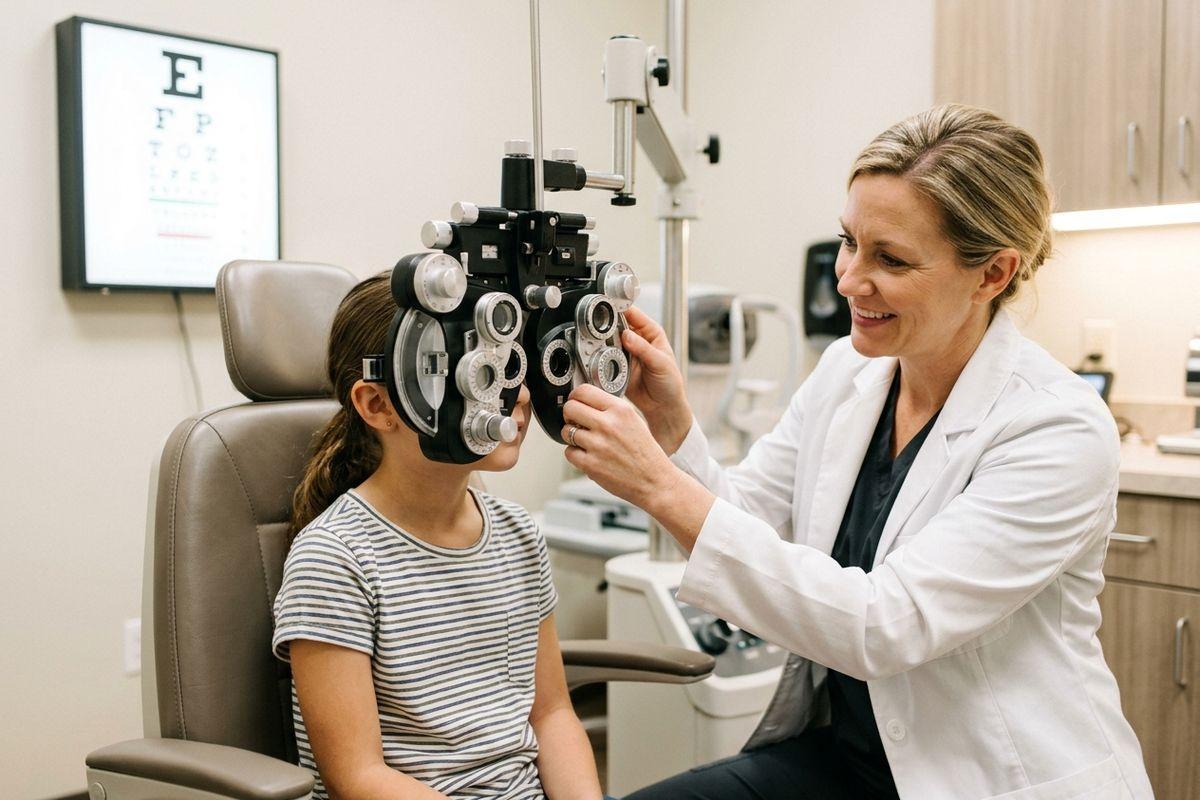
An exam looks at eye health along with the prescription, including how well the eyes work together and hold focus at close range. Bring a list of what you’ve noticed at home. Teachers see a lot too, so pass along anything that they may mention.
Daily habits help between visits. Send them outside when the weather allows, since time in natural light may slow how fast myopia progresses. Set up reading spots with decent lighting, and build in short breaks during long homework stretches.
Give Your Child’s Eyes a Head Start This School Year
Vision changes as kids grow, and regular exams help you stay ahead of those changes instead of reacting to them. Stonebridge Eye Care provides family eye care for children and adults across Edmond and the surrounding area.
Book your child’s eye exam and give their eyes the support they deserve.