

Glasses prescriptions don’t usually change overnight. Vision often drifts a little at a time, and by the time you notice, you might be squinting through your day or rubbing tired eyes by dinnertime.
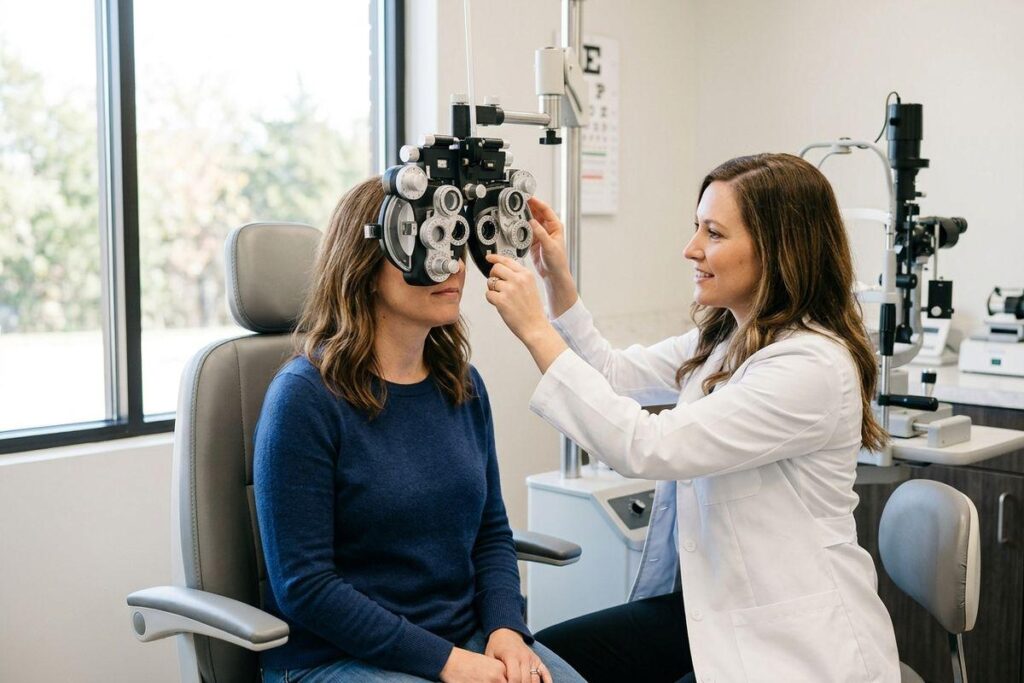
Most adults should update their glasses prescription every 1 to 2 years, though people over 40, children, and those with certain health conditions often need a check every year. A comprehensive eye exam can tell you exactly where your vision stands right now.
How Often to Update Your Prescription by Age
Your glasses might feel fine today. But your eyes rarely stay the same for long, and how often you need a fresh prescription depends a lot on your age.
Here’s how the timeline typically breaks down:
- Adults 18 to 40 can update their prescription every 1 to 2 years.
- Adults over 40 often need yearly exams, since focusing on close-up objects gets harder with a normal condition called presbyopia.
- Children and teens need annual exams because their eyes grow quickly, and their vision can change from year to year.
Follow this schedule to avoid the strain that comes with outdated lenses. Ask your optometrist to help build one around your needs.
Signs Your Prescription No Longer Works
Sometimes you don’t need a calendar to know it’s time. Your eyes tend to send clear signals when your lenses fall behind.
So watch for these signs:
- Blurry vision when you look at things close up or far away
- Headaches, squinting, or tired eyes after reading or screen use
- Trouble with night driving or extra glare from headlights
If you notice yourself pushing your glasses up or holding your phone at arm’s length, schedule an eye exam. These small habits often mean your prescription has drifted.
Signs to Watch for in Kids
Kids don’t always say when they can’t see well, as it isn’t easy getting a straight answer out of a seven-year-old. They just adjust in ways that are easy to miss.
- Sitting close to the television or screens
- Frequent eye rubbing
- Covering one eye
- A drop in schoolwork
- Less interest in reading
Book a family eye exam to spot these changes early. A quick check can make a difference in how a child sees the classroom.
What Affects How Fast Your Prescription Changes
Not everyone’s eyes change at the same pace. A few things can move your prescription along faster than you’d expect. Common factors include:
- Your age and the natural focusing changes that come with it
- Health conditions like diabetes, high blood pressure, or thyroid issues
- Certain medications
- Hormonal changes, including pregnancy
When your body changes, your eyes often follow.
When Eye Conditions Run in the Family
Eye conditions can run in families. If a parent or sibling has myopia or glaucoma, mention it to your optometrist, since these conditions may need closer monitoring.
Ask about myopia control if nearsightedness runs in your family and affects your child. Tracking their vision closely can help slow how quickly it progresses.

Screen Time and Digital Eye Strain
Hours in front of a laptop or phone can leave your eyes worn out. And digital eye strain tends to build up gradually, so you might not notice it until your eyes have had enough. You might notice:
- Blurry vision
- Dry eye
- Eye discomfort or fatigue
- Neck and shoulder pain from leaning toward the screen
Try the 20-20-20 rule to give your eyes a rest. Every 20 minutes, look at something 20 feet away for 20 seconds. If dryness sticks around, dry eye treatment can help you feel comfortable again.
The right lenses can ease that strain, too. Blue light filtering coatings can help reduce glare from digital displays. Ask your optometrist about computer lenses or multifocal options if close-up work leaves your eyes tired.
What You Gain From an Updated Prescription
Accurate lenses do more than sharpen the letters on a page. They can smooth out the small frustrations that add up through your day.
Here’s how an updated prescription can support your daily life:
- Less eye strain
- Fewer headaches
- Clearer vision at night while driving
- Early detection of eye changes through routine exams
Glasses and Contacts Aren’t the Same Prescription
A glasses prescription and a contact lens prescription aren’t the same thing. Contacts sit directly on your eye, so they need extra fit measurements to feel comfortable.
Ask your optometrist about a contact lens fitting if you want to give contacts a try. We can measure your eyes and help you find a lens that fits comfortably all day.
Time for an Eye Exam
Your prescription doesn’t come with a reminder alert, so it helps to have a team keeping track with you.
Stonebridge Eye Care offers thorough, compassionate eye exams for patients of all ages and can help you pin down exactly when your next update is due. Schedule your next eye exam and get your prescription back on schedule.