

Key Takeaways
- Myopia affects distance vision and can raise the risk of serious eye conditions over time.
- More than 3 hours of daily screen time has been linked to higher myopia risk in children.
- Children ages 6 to 7 are at the greatest risk during their eye development years.
- Outdoor time and screen limits can help support healthier vision habits.
- Myopia control options are available and worth discussing with an Edmond eye doctor.
- Regular eye exams help track changes and guide the right care plan for your child.
Tablets, phones, and laptops are part of school, homework, and downtime for most kids. If your child spends hours on a screen each day, you’ve probably wondered what it’s doing to their eyes, and many parents bring it up during their child’s eye exam.
Screen time hasn’t been proven to cause myopia on its own, but more daily screen use is linked to a higher risk, especially when it cuts into time outdoors. The team at Stonebridge Eye Care talks with families about this often, and there’s a lot you can do at home to support your child’s vision.
What Myopia Does to Your Child’s Vision
Myopia means your child has trouble seeing things clearly at a distance. The board at school looks fuzzy. Signs across the street are hard to read. Up close, though, everything looks fine.
What many parents don’t realize is that myopia isn’t just a glasses issue. Higher levels of myopia can raise your child’s long-term risk for conditions like glaucoma, cataracts, and retinal detachment. That’s why managing it early matters, not just for clear vision now, but for eye health down the road.
How Screen Time Affects Myopia Risk
A 2025 review of 45 studies found that each extra hour of daily screen time was linked to 21% higher odds of myopia. The risk rose fastest between 1 and 4 hours a day.
Younger children are more vulnerable to these effects than older kids. Their eyes are still developing, so the habits formed during these years are especially worth paying attention to. Bright light exposure outdoors is one of the better-supported factors in reducing myopia risk.
Age Makes a Difference
Children between ages 6 and 7 face a higher risk when it comes to screen-related myopia. As children get older, that risk decreases. But the early years are a key window, and what happens then can shape your child’s vision for years to come.
Signs Your Child’s Vision May Be Changing
Kids often don’t realize their vision has changed, since blurry distance vision may seem normal to them. Most children with myopia are diagnosed between ages 3 and 12, so keep an eye out for these signs during the school years:
- Squinting at the TV or the board at school
- Frequent headaches
- Sitting close to the TV
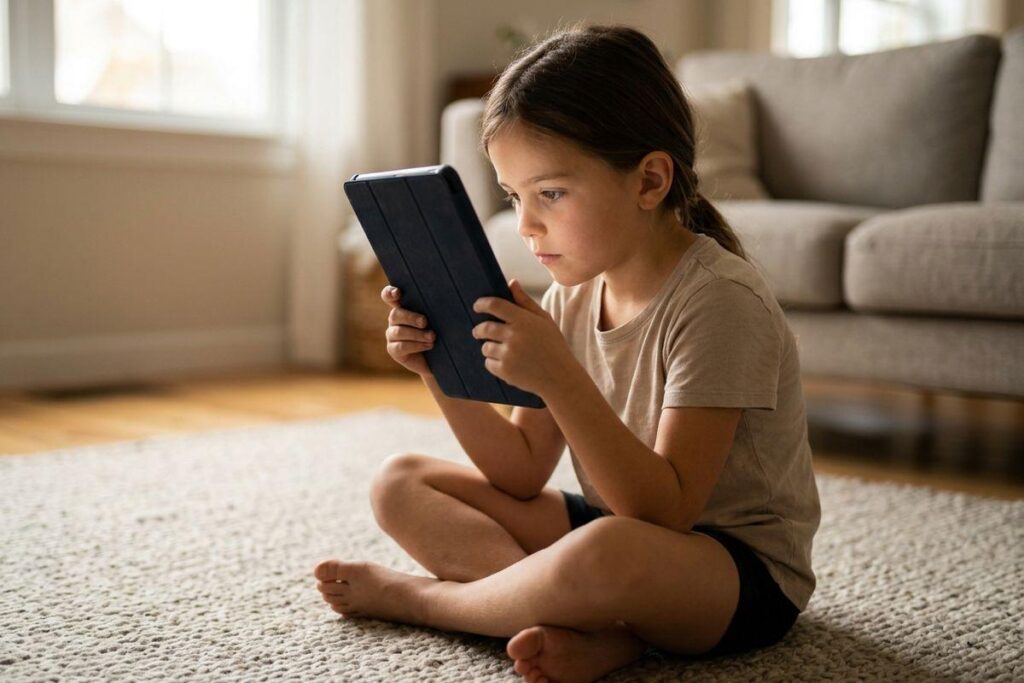
- Holding a phone or tablet near their face
- Slipping grades or losing interest in schoolwork
If you notice any of these, or they persist or get worse, book an eye exam so your optometrist can find out what’s going on.
What You Can Do to Help Slow Myopia
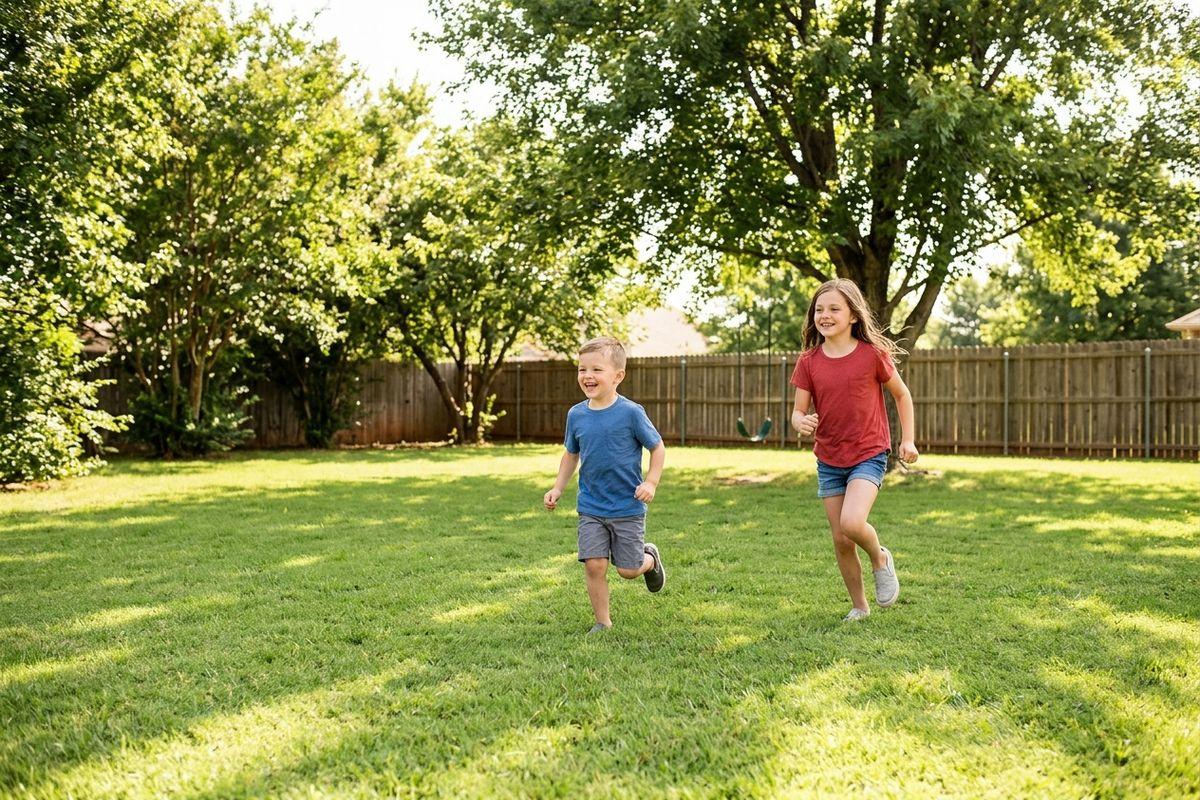
You don’t have to cut out screens completely. A few changes to your child’s daily habits can help lower their risk. Aim for at least 2 hours of outdoor play each day to give your child’s eyes exposure to natural light, which supports healthy development. Limiting screen time to about 2 to 3 hours per day helps reduce risk factors associated with myopia progression.
These aren’t always easy changes, but small, consistent adjustments tend to add up over time.
Myopia Options Worth Asking About
If your child already has myopia, ask your optometrist about myopia control. These treatments aim to slow how quickly your child’s myopia progresses. These options include:
- Multifocal soft contact lenses worn during the day
- Orthokeratology (ortho-k) lenses worn overnight to gently reshape the cornea
- Low-dose atropine eye drops
- Multifocal glasses designed for myopia control
A contact lens fitting can help you find out whether contacts suit your child’s age and prescription. Your optometrist will look at how quickly their myopia is progressing and what fits their daily routine before recommending a plan.
What a Children’s Eye Exam Checks for Myopia
A comprehensive eye exam does more than check whether your child needs glasses. It tracks how myopia progresses over time, which helps guide adjustments to their care plan. It also covers contact lens fitting if that becomes part of the plan, and it supports your whole family through routine and specialized care at every age.
Even if your child’s vision seems fine, an exam can give you a baseline to compare against as they grow. Plan on yearly visits through the school years.
Book an Eye Exam to Check Your Child’s Myopia Risk
Screens are part of your child’s life, but a few small changes to their routine can help support their vision as they grow. Regular exams can give you a clear picture of how their eyes are developing and what to do next.
At Stonebridge Eye Care, our optometrists help families understand their child’s myopia risk and choose a care plan that fits. Whether you’re worried about screen habits or you’ve noticed signs of myopia, book your child’s eye exam with our team.