

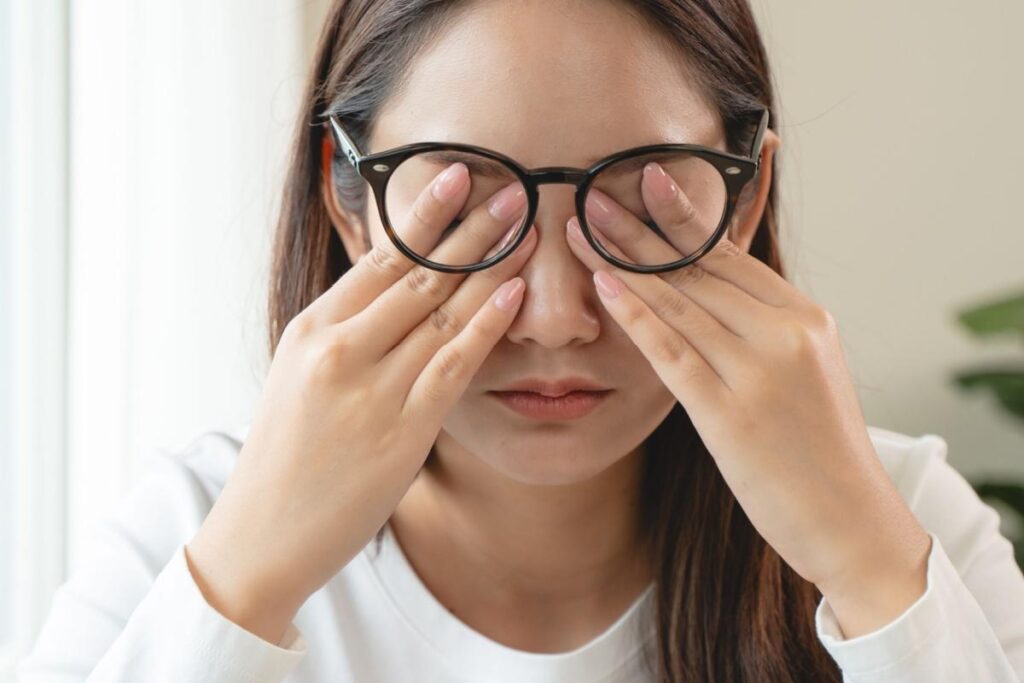
Your eyes might feel heavy, sore, or strained by the end of the day. You might notice it after hours at the computer or a long drive. This tired, uncomfortable feeling is common, and our team at Stonebridge Eye Care understands how it can make it hard to focus on your daily tasks.
You may wonder if it’s just a normal part of a busy day, but persistent discomfort is your body’s way of signalling a problem. Your eye fatigue often results from extended screen use, the lighting around you, and even an outdated glasses prescription. By understanding these factors, you can find simple ways to relieve discomfort and keep your eyes comfortable.
Common Causes of Eye Fatigue
Sustained Near Work (Screen Time)
When you focus on a computer, phone, or book for extended periods, your eye muscles work continuously to maintain focus at a fixed distance. This prolonged accommodation strains the ciliary muscles inside your eyes, causing fatigue and discomfort.
You also blink 50-60% less while looking at screens, which prevents your tears from spreading evenly across your eye surface. This leads to dry, irritated eyes that feel gritty and tired.
It is important to note though, that blue light from screens does not cause eye strain. The fatigue comes from the sustained near work and reduced blinking, not the light itself. Blue light filters won’t reduce eye strain symptoms, but there is evidence they help support the circadian rhythm.
Uncorrected or Incorrect Prescription
If your glasses or contact lens prescription is outdated, too weak, or simply wrong, your eyes work overtime trying to compensate. Common prescription-related causes of eye fatigue include:
- Uncorrected astigmatism: Makes it harder to focus clearly, especially on text and screens
- Presbyopia (age 40+): Natural loss of near focusing ability that makes reading and computer work exhausting without proper correction
- Wrong lens type for your work: Single-vision distance glasses force your eyes to strain for computer work; you may need computer glasses or progressives designed for intermediate distances
Binocular Vision Problems
Your eyes must work together as a team to maintain clear, single vision. When this teamwork breaks down, you experience eye fatigue even with a perfect prescription. Common issues include:
- Convergence insufficiency: Difficulty keeping eyes aligned when looking at near objects, causing double vision and fatigue
- Accommodative dysfunction: Eyes struggle to change focus between distances smoothly
Environmental Factors
Your surroundings significantly impact eye comfort:
- Poor lighting: Too dim forces your eyes to strain; too bright or harsh creates glare that makes focusing difficult
- Dry air: Air conditioning, heating, fans, and low humidity evaporate tears faster, leading to dry, tired eyes
- Screen glare: Reflections from windows or overhead lights make your eyes work harder to see clearly
Signs Your Eyes Need a Break
Your eyes send clear signals when they’re overworked and need rest. If you experience these symptoms regularly—especially after prolonged screen time or reading—it’s time to adjust your habits or schedule an eye exam:
Common Eye Strain Symptoms:
- Sore, scratchy, burning, or watery eyes
- Blurred vision or difficulty focusing, especially when switching between distances
- Double vision or text that seems to move or shimmer
- Increased sensitivity to light or glare
- Dry, gritty feeling like sand in your eyes
- Frequent headaches, especially around your temples or forehead
- Neck, shoulder, or upper back pain from straining to see clearly
When to Worry:
- Sudden vision changes that don’t improve after resting
- Persistent headaches despite reducing screen time
- Symptoms that worsen throughout the day or interfere with work
- Double vision that doesn’t go away when you blink

Simple Ways to Get Relief at Home & Work
Change Your Screen Habits
Small adjustments to your digital routine can make a noticeable difference in your eye comfort. These simple practices help reduce eye strain throughout the day.
- Follow the 20-20-20 rule—every 20 minutes, look at something 20 feet away for 20 seconds.
- Place your screen about 20 to 26 inches from your face, slightly below eye level.
- Make a conscious effort to blink fully and often to keep your eyes moist.
Use Soothing Techniques
When your eyes feel tired, a few simple actions can provide immediate comfort. These steps help refresh your eyes and relieve dryness and strain.
- Apply a clean, moist warm compress to your closed eyes for a few minutes.
- Use over-the-counter artificial tears to help lubricate and refresh your eyes.
- Stay hydrated by drinking plenty of water throughout the day.
How Your Surroundings Affect Your Eyes
Adjust Room Lighting & Glare
Creating a comfortable visual environment can reduce eye strain. Bright reflections and poor lighting are common sources of fatigue that are easy to address; solutions such as non-glare lenses can also help.
- Use soft, even lighting in your workspace instead of a single, harsh overhead light.
- Position your computer screen to avoid glare from windows or lamps.
- Keep your screens clean to reduce smudges and reflections that make focusing difficult.
Manage Dryness & Allergies
The air quality in your home or office can directly impact your eye comfort, especially if you have dry eye or allergies. Taking steps to control your environment can help.
- Use a humidifier to add moisture to the air, especially in dry months.
- Avoid direct exposure to smoke, strong fumes, and other airborne irritants.
- Give your eyes a break from contact lenses if they feel irritated. If this happens often, a professional contact lens fitting may help identify a more comfortable option.
When to Schedule an Eye Exam
Get a Professional Opinion
If home remedies don’t provide lasting relief, a comprehensive eye exam can help identify the root cause. You should consider a visit if you experience any of the following.
- Your symptoms do not improve with simple changes
- You have frequent headaches or ongoing eye discomfort
- Your vision changes suddenly
What Your Eye Doctor Checks
During an exam, our optometrist looks at more than just your vision. A thorough checkup can uncover underlying issues contributing to your eye fatigue and is an important part of family eye care.
- The accuracy of your glasses or contact lens prescription
- Signs of dryness that may benefit from dry eye treatment
- Your overall eye health and function
Understanding what causes your eyes to tire is the first step toward finding comfort. If you continue to experience eye fatigue, our team at Stonebridge Eye Care is here to help. We take the time to listen to your concerns, explain your options, and help you make informed decisions about your eye health.
Schedule your next eye exam to get the support you need.