

Many people think a comprehensive eye exam is just reading letters on a chart, but there’s much more happening during your visit. Your eye doctor evaluates not only how well you see but also checks for eye diseases that can develop without symptoms. If you’re preparing for your first visit, knowing what to expect during an eye exam can help ease any concerns and ensure you’re ready for your appointment.
A comprehensive eye exam is a thorough evaluation of your vision and eye health that includes multiple tests to measure visual acuity, check eye coordination, detect diseases, and determine if you need corrective lenses or further evaluation. This complete assessment can help catch problems early when treatment is most effective.
What Happens During Your Comprehensive Eye Exam
Patient History & Health Discussion
Your appointment begins with questions about your current vision concerns and overall health. We’ll discuss any medications you take, your work environment, and your family’s eye health history.
This information helps your eye doctor understand risk factors and symptoms that might affect your vision. Details about headaches, eye strain, or difficulty seeing at night provide important clues about potential problems.
Visual Acuity Testing
You’ll read letters on eye charts positioned at different distances to measure how clearly each eye sees. The results appear as fractions like 20/20 or 20/40, where the first number represents the testing distance and the second shows what a person with normal vision can see at that distance.
This test measures your current vision but doesn’t determine your prescription needs or detect eye diseases. It’s just the starting point for more detailed testing that comprehensive eye exams provide.
Preliminary Vision Tests
Several quick tests evaluate different aspects of your vision and eye function:
- Depth perception evaluation
- Color vision assessment
- Eye muscle movement testing
- Peripheral vision checks
- Pupil response to light
These tests can reveal problems with how your eyes work together and detect issues that might affect your daily activities like driving or reading.
Advanced Testing & Measurements
Corneal Shape Analysis
Corneal topography tests measure your cornea’s curvature using light reflection patterns. These measurements are particularly important for contact lens fitting and detecting conditions like astigmatism.
The cornea is your eye’s front surface, and its shape affects how light enters your eye. Irregular corneal shape can cause blurry or distorted vision.
Refraction for Prescription
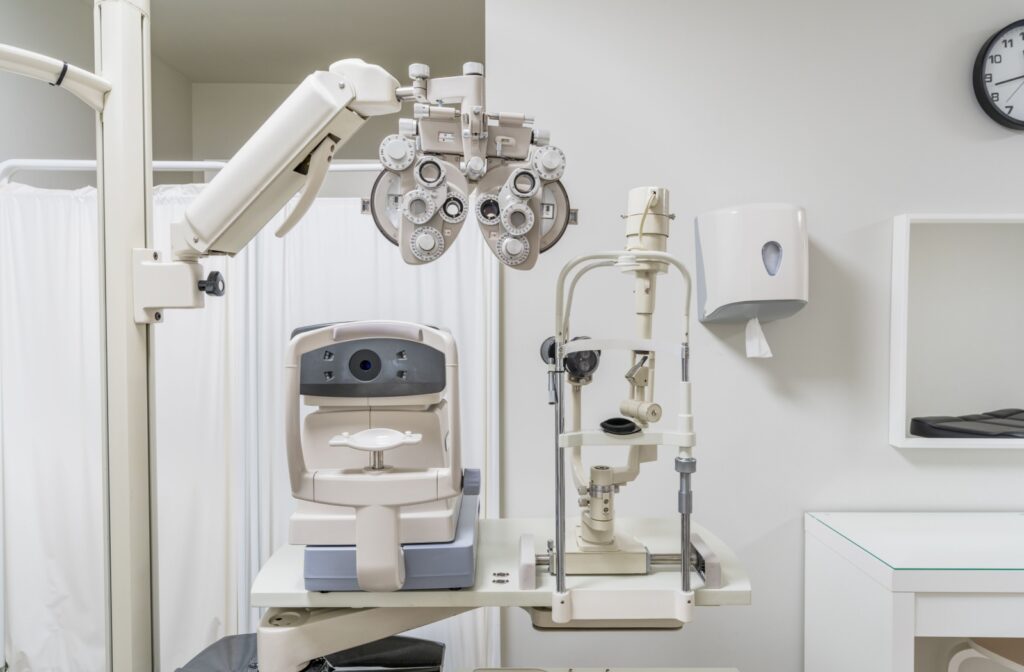
Using a phoropter, your eye doctor places different lenses in front of your eyes while you read an eye chart. This process determines your exact prescription needs for nearsightedness, farsightedness, or astigmatism.
You’ll be asked “which is clearer, one or two?” as different lens combinations are tested. This helps find the prescription that gives you the sharpest possible vision.
Eye Coordination & Movement Assessment
These tests evaluate how well your eyes focus, move, and work together to create clear, single images. Problems with eye coordination can cause double vision, eye strain, and reading difficulties.
Your eye doctor may ask you to follow a light or object with your eyes or focus on targets at different distances. Poor coordination can often be improved with vision therapy or corrective lenses.
Eye Health Evaluation & Disease Detection
External Eye Examination
Your eye doctor visually inspects your eyelids, conjunctiva, cornea, iris, and pupils using specialized lighting. This examination can detect infections, injuries, or structural problems affecting the front of your eye.
External problems like dry eye, allergies, or lid conditions often show visible signs that your eye doctor can identify during this examination. If dry eye symptoms are detected, specialized dry eye treatments may be recommended.
Slit Lamp Microscopy
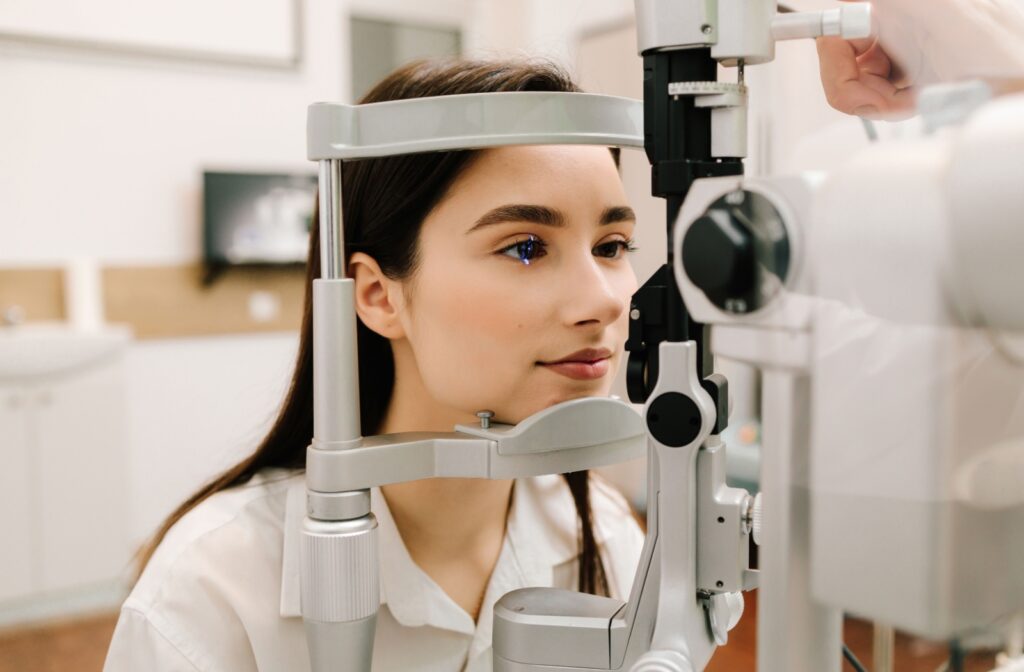
A slit lamp provides a detailed, magnified view of your eye structures using a high-powered microscope and bright light. This examination can detect cataracts, corneal problems, and other conditions affecting the front portion of your eye.
You’ll rest your chin and forehead against the instrument while your eye doctor examines different parts of your eye. The bright light might be uncomfortable but the test is painless.
Retinal Imaging & Dilation (Fundus Examination)
Today, most comprehensive eye exams include digital retinal imaging instead of—or in addition to—traditional dilation. Advanced tools like Optomap or OCT (optical coherence tomography) allow your optometrist to view the retina, optic nerve, and blood vessels in detail without using dilating drops.
In some cases, your eye doctor may still recommend dilation for a more thorough view, especially if you have diabetes, high myopia, or signs of retinal disease. When dilation is needed, the drops take about 20–30 minutes to work, and your vision may be light-sensitive for a few hours afterward.
Intraocular Pressure Testing
Measuring eye pressure, or tonometry, helps your optometrist screen for glaucoma, a condition that can cause vision loss without early symptoms.
Many clinics now use puff-free devices that measure pressure gently and quickly — no air puff or numbing drops required. In some cases, your optometrist may still use traditional air-puff or contact methods for confirmation, but all options are fast, comfortable, and provide important information about your eye health.
How Often You Need Comprehensive Eye Exams
Children’s Eye Exam Schedule
Children need regular eye exams to catch vision problems that can affect learning and development. Professional children’s eye exams follow specific timelines:
- 6 to 12 months of age for infants
- At least once between ages 3 and 5
- Before first grade and annually thereafter
Early detection of vision problems can help prevent learning difficulties and allow for more effective treatment.
Adult Examination Frequency
For most adults, an annual comprehensive eye exam is recommended to maintain clear vision and detect early signs of eye disease.
Some individuals may need more frequent exams depending on their vision needs, health conditions, or family history of eye problems. Your optometrist can advise on the right schedule based on your specific risk factors.
Many eye diseases develop gradually without symptoms, making regular comprehensive eye exams important for early detection.
When You Need More Frequent Exams
Certain conditions increase your risk of eye problems and require more frequent monitoring:
- Family history of eye disease
- Diabetes or other health conditions
- Contact lens wear
- Previous eye surgery or injury
- Taking medications with eye-related side effects
Your eye doctor can recommend the right exam schedule based on your individual risk factors and health history. Those with diabetes particularly benefit from regular monitoring.
Comprehensive Eye Exams vs Vision Screenings
Why Vision Screenings Fall Short
Vision screenings at schools or health fairs provide limited information about your eye health:
- Limited testing focuses only on distance vision
- Untrained personnel conduct screenings
- Basic equipment misses many eye problems
Screenings can miss serious eye diseases, vision problems affecting near work, and issues with eye coordination or focusing.
What Makes Comprehensive Exams Different
Only eye doctors have specialized training and equipment to diagnose eye diseases and provide complete vision assessment beyond simple acuity testing. Comprehensive exams can detect over 270 health conditions, not just how well you see letters on a chart.
Your eye doctor can detect early signs of glaucoma, diabetes complications, and other conditions that screenings miss completely. Early detection often leads to more successful treatment outcomes.
Can I Drive After a Comprehensive Eye Exam?
If your pupils are dilated during the exam, your vision may be blurry and more sensitive to light for a few hours afterward. It’s best to bring sunglasses and arrange a ride home if you’re unsure how dilation will affect you.
However, many modern eye exams use digital retinal imaging instead of dilation, allowing most patients to return to normal activities, including driving, right away. If you’re concerned, ask your optometrist before your appointment what testing method will be used.
Protecting Your Vision for the Future
Comprehensive eye exams are one of the most effective ways to preserve lifelong vision. Beyond checking how clearly you see, these exams allow your optometrist to detect early signs of conditions such as glaucoma, macular degeneration, or diabetic eye disease — often before any symptoms appear.
Regular exams also help ensure your prescription stays current and your eyes remain healthy as your lifestyle and vision needs change. Whether you spend long hours on digital devices, wear contact lenses, or have a family history of eye disease, consistent monitoring supports early treatment and peace of mind.
At Stonebridge Eye Care, we use advanced diagnostic technology — including digital retinal imaging and puff-free pressure testing — to make your visit comfortable, efficient, and thorough. Our friendly team takes time to explain your results, answer your questions, and personalize recommendations for your unique visual needs.
Protect your vision, your comfort, and your confidence in every part of life — schedule your next comprehensive eye exam with Stonebridge Eye Care in Edmond today.