

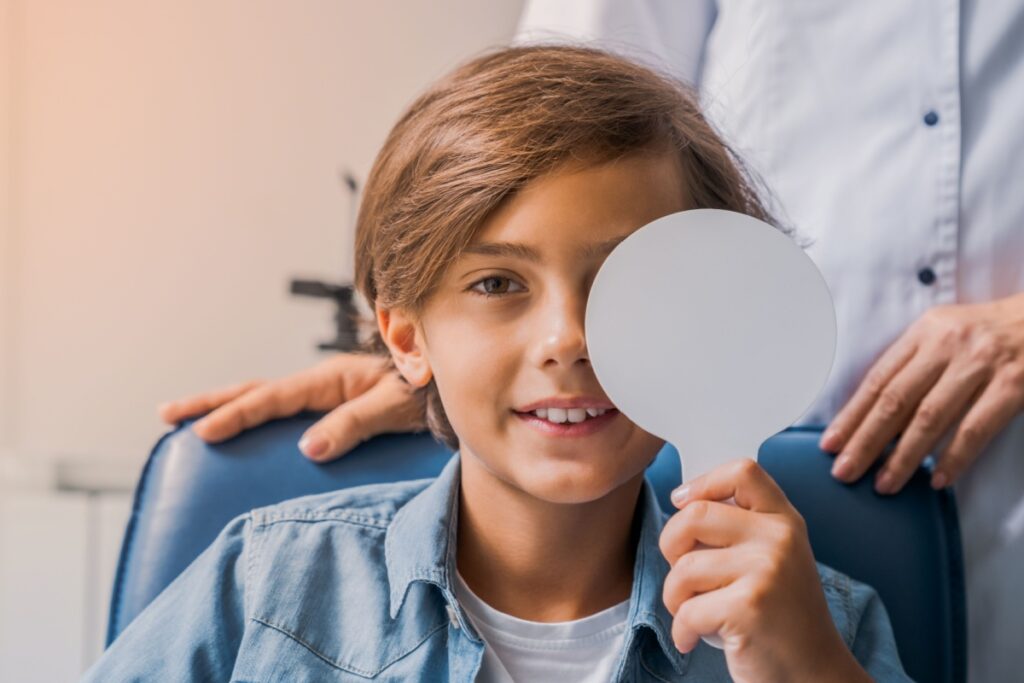
Vision problems may cause your child to squint to see the board at school or move closer to the television. These can be signs of myopia, also known as nearsightedness, and it’s natural to wonder if this change in their vision is permanent.
While myopia cannot be reversed, its progression can often be slowed down with effective management strategies. The focus for children shifts from reversal to control, so we can support their eye health for years to come.
What Is Myopia?
Myopia is a common vision condition that often begins in childhood. It happens when your child’s eye grows a little too long from front to back, or the front of the eye is too curved. This growth causes distant objects to look blurry while things up close remain clear.
Think of your child’s eye like a camera. For a clear picture, light needs to focus directly on the film at the back of the eye, the retina. With myopia, the light focuses in front of the retina instead. This is why things far away seem out of focus for them.
Common Signs of Myopia in Your Child
Your child might not always tell you they have blurry vision, but you can look for other clues. You might spot these signs first:
- Squinting to see distant objects
- Needing to sit closer to the TV or at the front of the classroom
- Holding books or devices very close to their face
- Complaining of headaches or tired eyes
- Rubbing their eyes frequently
The Effects of Myopia on Children’s Eyes
The physical changes to your child’s eye shape are permanent. Because of this, myopia cannot be reversed. However, this does not mean you are without options. The goal simply changes from reversal to active management.
Once the eye has grown longer, it doesn’t shrink back to its previous shape. This physical change means your child will need vision correction, such as glasses or contact lenses, to focus light properly.
High levels of myopia are connected to a greater risk for conditions like retinal detachments, glaucoma, and cataracts in adulthood. A complete eye exam can determine the exact prescription your child needs for clear vision.
The good news is that you can take steps to slow down how quickly your child’s myopia gets worse. This treatment is called myopia control. Its main goal is to keep your child’s prescription from rapidly increasing as they grow, protecting their vision for the future.
Effective Myopia Control for Children
There are a variety of effective treatment methods to help prevent myopia from getting worse. Some popular options include:
- Multifocal contact lenses: Multifocal soft contact lenses designed for myopia control create a specific focus pattern across the retina, signaling the eye to slow its growth.
- Ortho-k lenses: Orthokeratology (ortho-k) uses specially designed rigid lenses worn only during sleep. These lenses gently reshape the cornea overnight, providing clear vision all day without glasses or daytime contacts. Plus, the treatment is reversible. If your child stops wearing the lenses, their cornea returns to its original shape.
- Low-dose atropine eye drops: Prescription atropine eye drops used at bedtime can help children’s eyes relax and reduce the signals that cause eye elongation.
- Myopia control eyeglasses: Much like the multifocal contacts, these specialized lenses designed for myopia control look like regular glasses but use technology that manages peripheral focus to slow eye growth. They’re often the best starting point for younger children or those not yet ready for contact lenses. They’re worn like regular glasses and require only normal cleaning.
The primary aim is to keep your child’s prescription as low as possible for as long as possible. A stable prescription means they need fewer changes to their glasses or contacts, and their vision is more comfortable day to day.
Creating Your Child’s Personalized Plan
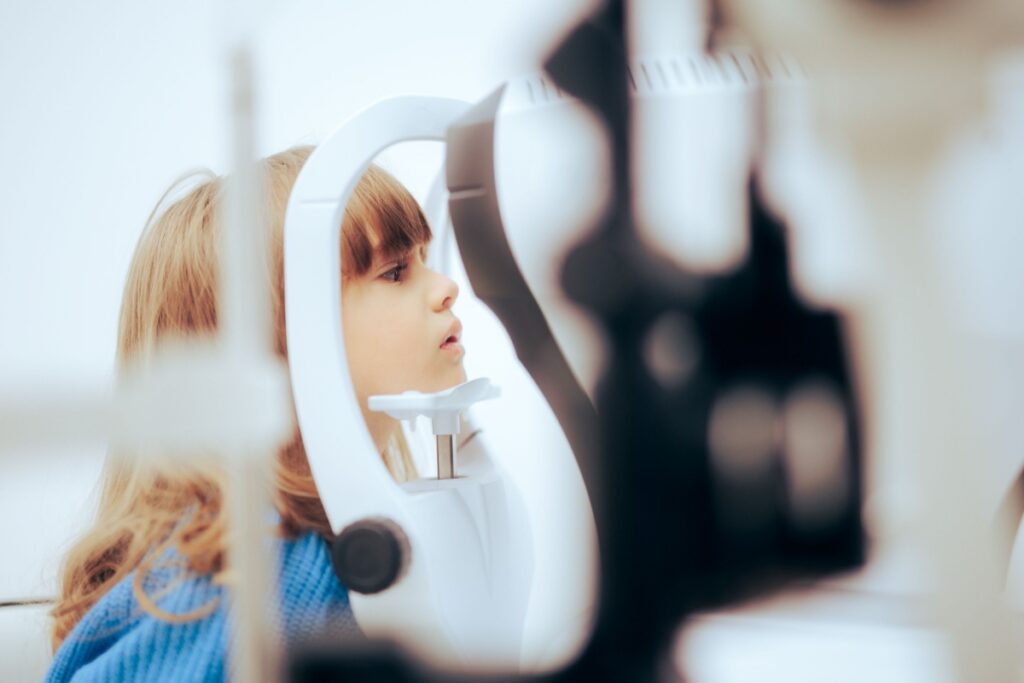
Myopia control starts with a consultation. This allows the doctor to check your child’s vision and overall eye health, which gives a clear picture of their needs. This detailed evaluation goes far beyond a simple vision screening at school. During this consultation, your eye care team can:
- Measure your child’s current prescription and assess how quickly their myopia has progressed
- Discuss your child’s daily activities, sports participation, and screen time habits
- Consider your family’s preferences and your child’s comfort level with different options
- Review the benefits and requirements of each treatment approach for your specific situation
- Create a monitoring schedule with check-ups, typically every 6 months, to track progress
Most children achieve the best results when myopia control treatment begins as soon as myopia is detected and continues consistently through their teenage years until eye growth naturally stabilizes (usually late teens to early twenties). The earlier treatment starts, the more effective it can be at preventing high levels of myopia.
Helpful Lifestyle Habits That Support Treatment
Simple changes at home can support your child’s myopia control plan and overall eye health:
- Encourage More Outdoor Time: Studies show that children who spend at least 1–2 hours outdoors daily have slower myopia progression. Natural daylight exposure appears to have a protective effect on developing eyes. Outdoor play doesn’t need to be organized sports, as simply being outside counts.
- Follow the 20-20-20 Rule for Screens: Every 20 minutes spent on close-up work or screens, have your child take a 20-second break to look at something at least 20 feet away. This gives their eye muscles a chance to relax and reduces strain.
- Maintain Proper Reading Distance: Encourage your child to hold books, tablets, and phones at a comfortable distance (about 16–18 inches away) rather than very close to their face.
These lifestyle adjustments work best alongside professional myopia control treatments, not as replacements for them.
Book Your Child’s Eye Exam
Effective myopia management involves ongoing care. Regular appointments allow our team to monitor your child’s vision. These visits help their treatment plan remain effective as they grow and their eyes change.
Whether your child needs an eye exam, help with myopia, or other vision support, the team at Stonebridge Eye Care is here to support your family. Schedule a visit to discuss a clear path forward for your child’s vision and eye health.